
Lead Generation in Pakistan
Campaigns, landing pages, qualification and follow-up systems that deliver enquiries your sales team can close — measured by cost per customer, not just cost per lead.
Get a free quote on WhatsApp
Tell us a bit about your business — a strategist replies on WhatsApp within hours.
How does our lead generation system work?
Leads fail for predictable reasons: the wrong audience, a weak offer, no qualification, or slow follow-up. We build the whole system — attract, capture, qualify, hand over — and agree with your sales team what a good lead looks like before anything launches. Then we optimise towards leads that become customers.
Every stage of the funnel
Channel strategy
Google, Meta, LinkedIn, content and outbound — chosen by where your buyers look for solutions.
Offers & landing pages
Consultations, audits, quotes or guides that give people a real reason to get in touch.
Qualification
Form questions, WhatsApp flows and lead scoring that separate buyers from browsers.
Pipeline setup
A CRM or structured sheet with owners, stages and follow-up reminders so no lead is lost.
Nurturing
Email and WhatsApp sequences for leads not ready to buy yet.
LinkedIn & outbound
Targeted, personalised outreach to decision-makers at accounts you choose.
Our process
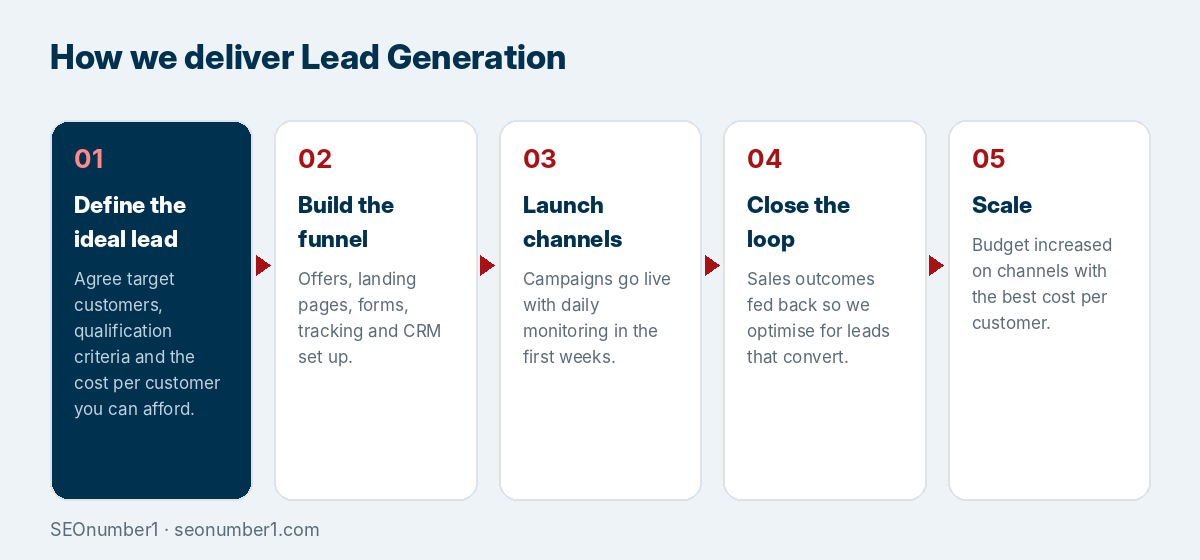
- Define the ideal lead Agree target customers, qualification criteria and the cost per customer you can afford.
- Build the funnel Offers, landing pages, forms, tracking and CRM set up.
- Launch channels Campaigns go live with daily monitoring in the first weeks.
- Close the loop Sales outcomes fed back so we optimise for leads that convert.
- Scale Budget increased on channels with the best cost per customer.
How do we measure lead generation?
- Cost per lead by channel and campaign
- Lead-to-qualified and qualified-to-customer rates
- Speed of first response
- Cost per customer and return on spend
- Pipeline value created each month
- Reasons leads were lost
Lead generation for your industry
Agree what a good lead is
The most common reason lead generation disappoints is that marketing and sales mean different things by “lead”. Before launching, we write down the criteria together — for example, a business with more than 20 staff, a budget above a set level and a need within three months — and decide what happens to leads that don’t meet them. That definition drives targeting, form questions and reporting.
- Ideal customer profile written down
- Qualification criteria agreed with sales
- Response-time target set
- Lost-lead reasons recorded
What mistakes do we see most in lead generation?
- Measuring leads, not customers. A cheap lead that never buys is expensive. Track cost per customer by channel.
- Slow first response. Interest drops quickly. Reply within minutes during working hours.
- No agreed lead definition. When sales and marketing disagree on what a good lead is, both blame the other. Write it down.
- Generic “contact us” offers. Give people a concrete reason to reach out: an audit, quote, consultation or guide.
- Buying lead lists. Bought lists are often outdated, can breach privacy rules and contact people with no interest.
Official guidance we follow
Platform and regulator documentation behind the advice on this page.
Lead generation — frequently asked questions
Do you sell lead lists?
No. We generate leads through your own campaigns, so they are exclusive to you and have shown real interest.
How do you handle B2B versus B2C?
B2C usually relies on search and social ads with fast WhatsApp follow-up; B2B adds LinkedIn, content and outbound with longer nurturing.
Can you work with our existing CRM?
Yes. We connect forms and campaigns to your CRM, or set up a simple one if you don’t have it.
What if leads are poor quality?
We adjust targeting, offers and qualification questions based on your sales feedback — which is why closing the loop with sales matters.